June 19th, 2013

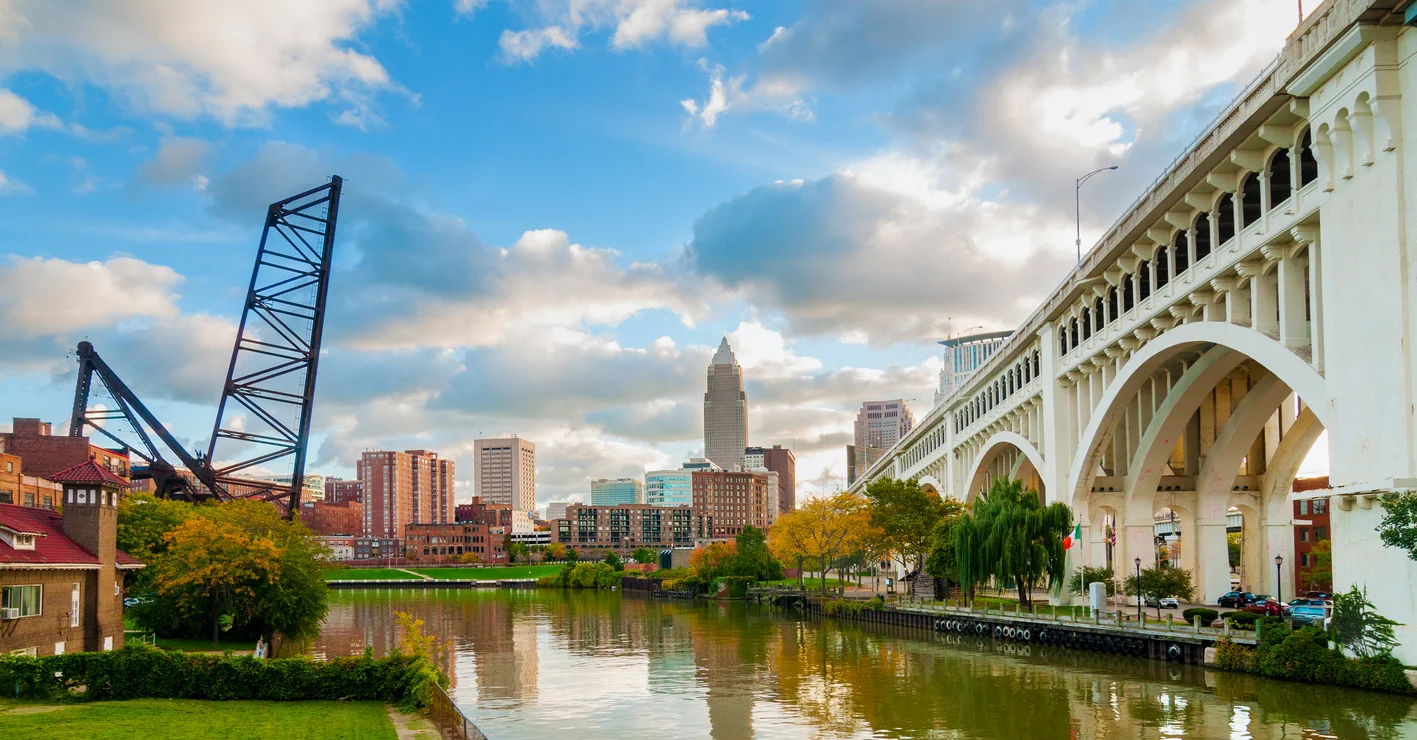
James Corner Field Operations is a landscaping design firm that has worked on many public spaces in the United States. Above is a design concept for the new Public Square.
Cuyahoga County Executive Ed FitzGerald and Cleveland Mayor Frank Jackson have made a historic agreement to reinvest in downtown’s infrastructure. The Plain Dealer is reporting that the total money available is $93 million because the new Medical Mart is expected to finish under budget and ahead of schedule.
As reported by Steven Litt, “FitzGerald wants to avoid spreading that sum around the county like peanut butter on a thin layer of small efforts”. Instead he wants to focus the money on the downtown that will expand the region’s reach for tourism, job growth, and infrastructure.
He will leverage the money to get a total amount of $300-350 million to spend on the new area created by the bus-rapid transit HealthLine on Euclid Avenue to the downtown casino and convention center.
Proposals include:
- 650 room convention hotel
- Envision a downtown mall/Public Square
- Pedestrian bridge over the lakefront railroad lines
- 740 space parking garage
- Trigger residential/office/retail development
- Better bike/pedestrian connections
“The partnership signals a new civic awareness that in addition to building excellent attractions, Cleveland needs to acquire a beautiful public realm that encourages visitors and residents alike to enjoy the city on foot or on a bike”, according to Steven Litt.
Cleveland and Cuyahoga County are taking massive steps towards realizing smarter growth in their region. The creation of new development along a growing corridor could lead to job creation for the region’s unemployed as well as boost the overall economy of Cleveland.
Tags: City of Cleveland, Collaboration, Cuyahoga County
Posted in Quality of Place, Smart Growth | No Comments »
June 5th, 2013

Smart Growth America recently released a new report titled “Building Better Budgets: A National Examination of the Fiscal Benefits of Smart Growth Development,” which discusses the economic benefits of smart growth as opposed to traditional development patterns. According to SGA, it is the first to determine a national average for how much communities can expect to save through the use of smart growth strategies.
The report analyzes 17 case study areas, comparing development scenarios within each. The first scenario, “smart growth development,” is characterized by more efficient use of land; a mixture of homes, businesses and services located close together; and better connections between streets and neighborhoods. The second scenario, “conventional suburban development,” is characterized by less efficient use of land with homes, schools and businesses separated and areas designed primarily for driving.
Their findings include the following:
- Smart growth development costs one-third less for upfront infrastructure.
- Smart growth development saves an average of 10 percent of the costs for ongoing delivery of services.
- Smart growth development generates 10 times more tax revenue per acre than conventional suburban development
Ohio has seen an increase in the adoption of smart growth policies, including most recently in Piqua. GOPC continues to address the need for more smart growth policies throughout the state.
Tags: Building Better Budgets, SGA, Smart Growth
Posted in Smart Growth | No Comments »
June 5th, 2013

From 1984 to 2012, the Central Ohio region has changed in population and in land development, as shown in the satellite images above. To view land use changes in any part of the world from 1984 to 2012, click here and scroll down to the embedded Google Earth map, in which you can zoom and scroll to find your area of interest.
The City of Columbus has grown from 564,866 in 1980 to 809,798 persons in 2012. Land development has expanded out from the city center over that period as well, as can be seen in the satellite image timelapse. In the last decade, however, it appears as though more development has occurred within the inner city ring, which is a promising trend for smart growth.
Google is working with its public and private partners to continue releasing these images to the public in the future. According to Google, this is the most comprehensive photography ever created of the planet. Timelapse videos of this sort could be used as a tool to see the outcomes of sprawl, climate change, and natural disasters over time–hopefully contributing to public awareness about the need for smart land use decisions.
“A Terrifying, Fascinating Timelapse of 30 Years of Human Impact on Earth” – The Atlantic Cities
Tags: Google, Sprawl, Timelapse
Posted in Smart Growth, Uncategorized | No Comments »
May 1st, 2013

Revitalizing Ohio’s Vacant Properties:
Tools & Policies to Transform Communities
October 22-23, 2013
The Westin Columbus
310 S. High Street
Columbus, Ohio, 43215
The Greater Ohio Policy Center & The Thriving Communities Institute invite you to attend Revitalizing Ohio’s Vacant Properties, a two-day interactive training and policy solutions summit that will offer hands-on techniques and strategies to address vacant and abandoned property development challenges and generate redevelopment opportunities. It is intended for local and regional leaders, land bank practitioners, nonprofit community development organizations, as well as private sector representatives.
The summit will provide opportunities for input into policy reforms that arm local leaders with new tools and that align policies with local community development needs. Sessions will feature local practitioners, financial institutions, and state and national level redevelopment experts. The Institute’s goals—training and education, coalition-building and policy advancement—are vital to productively revitalize Ohio’s communities.
For questions or sponsorship opportunities, please contact Kate Hydock of Thriving Communities Institute (khydock@wrlandconservancy.org or 216-515-8300) or Christina Burke of Greater Ohio Policy Center (cburke@greaterohio.org or 614-224-0187).
Agenda and online registration information to come.
Tags: 2013, Summit, Thriving Communities Institute, Vacant Properties
Posted in Events, Latest News, Smart Growth, Vacant and Abandoned Property | 1 Comment »
February 13th, 2013
By John Gardocki, Greater Ohio Policy Center Intern
“Cities are living places that require ongoing awareness and firm yet flexible approaches to decision making which acknowledge changing realities and multiple voices, leading to pragmatic and agreed-on solutions” (Detroit Future City Framework, 12).
Future City, a two year report offering short and long term solutions to restore Detroit was recently released by Detroit Works. It is the culmination of an in-depth 24 month process involving 30,000 interviews, 70,000 surveys, and hundreds of public meetings.
Below are some key statistics that demonstrate the challenges Detroit is facing and the need to come together to solve these problems.
- 79,725 out of 350,000 units are vacant in the city of Detroit-meaning the city has an astounding vacancy rate of 22.7%
- 700,000 people live in a city originally designed for 2 million people.
- There is only one job for every four Detroit residents
- A recent survey of Detroit residents revealed that nearly one-third of the respondents would leave the city within five years, citing safety as the top reason.
Four major targets are to be evaluated in 2030 that stakeholders see in their vision that will be accomplished from the framework.
By 2030, Detroit will have a stabilized population
By 2030 the city will have two or three jobs for each person living in the city
By 2030, the Detroit Metropolitan region has an integrated regional public transportation system
By 2030, Detroit will become a city for all
The plan outlines several strategies that should be put into place to make a permanent transformation in Detroit over the next 20 years or more. There are five major planning elements: Economic Growth, Land Use, City Systems, Neighborhoods, and Land and Building Assets built within the framework to enforce the strategies:
- Economic Growth is intended to make Detroit’s economy more knowledge based by utilizing four economic pillars: Global Trade/Industrial, Digital/Creative, Local Entrepreneurship, and Education & Medical. The four knowledge based sectors are meant to diversify the workforce.
- Land Use is integral to transforming Detroit by addressing four key ideas: A City of Multiple Employment Districts, A City of Connecting People to Opportunity, A Green City Where Landscapes Contribute to Health, and A City of Distinct, Attractive Neighborhoods. The city’s current footprint is too expansive to meet the current population and fiscal capacity and so it needs to be refocused to be more sustainable.
- City Systems revises the path to sustainable systems by using three transformative ideas: Strategic Infrastructure Renewal, Landscape As 21st Century Infrastructure, and Diversified Transportation for Detroit and The Region. This element is important to the city to determine which systems are critical to remain online, discontinued, or upgraded. Financially the city cannot afford to give out these resources to areas that are not populated.
- Neighborhood utilizes five ideas to create more choices for residents: A City of Many Assets, A City of Neighborhood Choices, A City of Different Strategies for Different Neighborhoods, A City of Diverse Housing Types for Diverse Populations, and A City of Residents Who Engage In Their Own Futures. To remain competitive and meet the demands of a 21st century city, Detroit needs to understand the needs of their many neighborhoods and the unique challenges each neighborhood may face.
- Land and Building Assets is critical to solving Detroit’s vacancy problems which will be initiated by: A City That Shares A Vision: Coordinating the Management of Vacant Land, A City Where Everything Is Connected: Viewing Vacant and Problem Properties Within One Interrelated System, A City of Strategic Approaches: Recognizing The Uniqueness of Each Property’s Value and Challenges, A New Urban Landscape: Using Land for Infrastructure And Innovation, and a City Where Public Facility Investments Count: Aligning Public Facilities With Land Use Transportation. Detroit has numerous neighborhoods that are beset by blight and have vacant land that needs to be utilized for new uses like parks, urban farming, and commercialization. To get a handle on the declining population will mean a critical movement to alter the vacancy problem in Detroit.
The use of info-graphics and GIS data helps to showcase Detroit’s urban crises and how they are interconnected. Figuring out exactly where the problems are heavily weighted will help impact the city’s strategy.

Detroit has a wide range of economic assets that should be capitalized on to fuel economic growth. Assets include existing businesses, institutions and transportation infrastructure. (Detroit Future City Framework, 38).
This first of its kind report can be a great tool for other cities across America facing similar problems to better assess and find new and innovative solutions.
Posted in Best Practices, Cities in Transition, Innovation, Quality of Place, Smart Growth, Vacant and Abandoned Property | 1 Comment »
January 25th, 2013

On our journey from Cincinnati to Columbus to Cleveland for the joint ULI/GOPC/LOCUS event series, “Advancing Ohio’s Urban Agenda: Walkable Communities for Globally Competitive Cities,” trends amongst the three cities became apparent as participants engaged in the dialogue about addressing the market demand for walkable development in Ohio. We were able to capture some of these trends in both text and film (yes, videos are coming!) form and would like to share some of the key highlights with you.
Highlights from the Events:
Tags: Christopher Leinberger, LOCUS, ULI, Walkable Development
Posted in Infrastructure, On The GO, Quality of Place, Smart Growth, Transit | No Comments »
January 18th, 2013

In Ohio and around the country, real estate developers and investors are recognizing pent-up demand for and a market shift toward sustainable, walkable urban places. Despite this paradigm shift and change in market momentum, many local, state and federal policies currently in place distort development incentives and hamper efforts to create the development consumers want and that support strong local economies. Urban developers and real estate and land use experts can align to provide state and national policy makers with expert advice on current consumer demand and the many benefits of urban and metropolitan growth strategies.
Over the past few days—January 16th and 17th—Greater Ohio traveled to Cincinnati, Columbus and Cleveland to co-host events with the Urban Land Institute (ULI) district councils of Cincinnati, Cleveland and Columbus, as well as LOCUS to host “Advancing Ohio’s Urban Agenda: Walkable Communities for Globally Competitive Cities,” an exclusive series featuring Christopher Leinberger, President of LOCUS—a national network of real estate developers and investors that advocates for sustainable, walkable urban development in America’s metropolitan areas.
These first-of-their-kind events in Ohio provided a forum to connect developers from urban centers across the state to discuss the demand for sustainable communities. The gatherings were a critical first step toward identifying ways to inform policymakers and ultimately help more communities across Ohio develop in ways that are sustainable for the environment, the people living in them, and their bottom lines.
Click here to read Mark Ferenchick’s Columbus Dispatch article on the Columbus event: “Walkable urban development will keep younger professionals in Columbus, expert says”.
Posted in Events, Infrastructure, On The GO, Quality of Place, Smart Growth, Transit | 1 Comment »
January 18th, 2013
We are proud of the accomplishments we have made in 2012. To fill you in on what’s been going on at GOPC’s office and throughout the state in the past year, below is a list of our accomplishments within our three priority policy areas: Urban Core and Neighborhood Redevelopment, Transportation and Sustainable Growth, and Regional Governance Reform. Together, redeveloping our urban centers, expanding our transportation options, and fostering regional cooperation will contribute to smarter, more sustainable growth, improving our quality of life and economic competitiveness in Ohio.
URBAN CORE & NEIGHBORHOOD REDEVELOPMENT
Raising Our Statewide Profile:
-
Ohio Properties Redevelopment Institute. GOPC hosted this innovative two-day forum that promoted solutions to vacant and abandoned properties. Nearly 200 local leaders from municipalities and non-profit community development organizations across the state attended.
-
Moving Ohio Forward Grant Program. The Ohio Attorney General’s office contracted with the GOPC to provide technical assistance to communities for the Moving Ohio Forward Grant Program, which supports Ohio’s communities undertaking activities to demolish abandoned and vacant residential properties.
-
Panels and Keynotes. GOPC presented on urban revitalization issues over 20 times to a variety of audiences including Ohio code enforcement officers, Cincinnati’s Foreclosure Group, Cleveland’s Vacant and Abandoned Property Action Council (VAPAC), and Heritage Ohio workshop attendees.
-
In the Media. In 2012, GOPC was quoted or cited over 50 times in Ohio’s major newspapers and other publications around the country. In one article about vacant properties, The Columbus Dispatch relied heavily on data and graphs produced by GOPC.
Read the rest of this entry »
Posted in Budget, Economic Development, Latest News, Legislation and Testimony, Regionalism, Smart Growth, Transit, Vacant and Abandoned Property | 1 Comment »
July 18th, 2012

The Ohio Department of Transportation (ODOT) is currently writing its long-term transportation plan called Access Ohio 2040. You can participate in their stakeholder engagement process by going to this link and clicking “Take the Access Ohio Survey.” Let them know your priorities for transportation in Ohio!
At Greater Ohio, we support investing in fix-it-first strategies for Ohio’s existing transportation infrastructure and finding more sustainable funding sources for our public transit systems.
By increasing our state’s transportation options with increased bus, rail, pedestrian and bicycle infrastructure, we can reduce our dependency on and need for new and expanded roads. Not only will a comprehensive transportation system limit the cost of infrastructure to taxpayers in the long term, but also decrease traffic congestion, fossil fuel consumption, and health issues related to inactivity. Building more robust public transportation systems will also help create jobs and boost economic development in the state, because people and businesses want to locate in areas that are accessible by more means than just cars. As the price of fossil fuels continues to escalate, it’s time that as a state, we build a more sustainable system of transportation.
You can help make a difference for the future of transportation in Ohio by taking this survey and letting ODOT know your priorities for transportation in Ohio.
Tags: Access Ohio, Access Ohio 2040, fix-it-first, ODOT, Ohio Department of Transportation, transportation
Posted in Infrastructure, Latest News, Smart Growth, Transit | No Comments »
July 10th, 2012

By Smart Growth America
The twelve counties that make up Northeast Ohio are home to a community that prides itself on its public art, theaters, parks and hiking trails, and home-grown businesses. Now, a new vanguard of engaged residents are working with a local organization to make Northeast Ohio even better.
The first step in this process is to examine what’s working in Northeast Ohio’s communities, and a new survey from the Northeast Ohio Sustainable Communities Consortium (NEOSCC) does just that. NEOSCC released its Conditions & Trends platform on Tuesday, during the Consortium’s monthly meeting in Youngstown. The extensive inventory of Northeast Ohio’s assets, challenges and year-over-year trends provides a comprehensive assessment of how the region could improve.
Read the rest of this entry »
Tags: Conditions and Trends Platform, DOT, EPA, HUD, NEOSCC, Northeast Ohio Sustainable Communities Consortium, Partnership for Sustainable Communities, SGA, Smart Growth America, Sustainable Communities Regional Planning Grant
Posted in Guest Post, Latest News, Regionalism, Smart Growth | No Comments »