Google Earth Timelapse Shows Sprawl Since 1984

June 5th, 2013

From 1984 to 2012, the Central Ohio region has changed in population and in land development, as shown in the satellite images above. To view land use changes in any part of the world from 1984 to 2012, click here and scroll down to the embedded Google Earth map, in which you can zoom and scroll to find your area of interest.

The City of Columbus has grown from 564,866 in 1980 to 809,798 persons in 2012. Land development has expanded out from the city center over that period as well, as can be seen in the satellite image timelapse. In the last decade, however, it appears as though more development has occurred within the inner city ring, which is a promising trend for smart growth.

Google is working with its public and private partners to continue releasing these images to the public in the future.  According to Google, this is the most comprehensive photography ever created of the planet.  Timelapse videos of this sort could be used as a tool to see the outcomes of sprawl, climate change, and natural disasters over time–hopefully contributing to public awareness about the need for smart land use decisions.

“A Terrifying, Fascinating Timelapse of 30 Years of Human Impact on Earth” – The Atlantic Cities

Residents Sing for Grand Rapids

May 24th, 2013

By John Gardocki, GOPC Intern

The YouTube video “The Grand Rapids LipDub” inspired me to visit Grand Rapids.  I wanted to see what residents of Grand Rapids see in their shrinking city.  Citizens of so called “declining cities” often see the potential and character of their cities below the layer of vacancy and abandonment.

The first thing I noticed driving into the city is that it arrives out of nowhere; it literally is enclosed behind a wall of flora. The Grand Rapids region is committed to keeping nature as part of the city. The city is separated into four sections and has a unique topography that makes the downtown visible from the riverfront walkway.  Most of the major centers of activity are located along the river, including the Grand Rapids Public Museum, the Gerald Ford Presidential Library, the Public Market, and the Davos Auditorium.  The charm of Grand Rapids takes form in its architecture and historical neighborhoods.  Overall, I was impressed with the city and would like to come back see more.

Grand Rapids is poised to become a destination city if it continues to enhance its quality of life and garner resident support.  The video above gives a glimpse into the unique gifts of Grand Rapids.  Challenge yourself to think of the great assets of your city.  Eventually others in the community will see the potential for their places, just as Grand Rapid’s residents did.

GOPC Undergraduate Writing Intern Reflects on Vacant Properties Policies

May 16th, 2013

Ryan Conlon recently graduated from the John Glenn School of Public Affairs at the Ohio State University.  Ryan spent his spring 2013 semester as an intern at GOPC to fulfill his “Writing for Nonprofits” course. 

Possible Policies for Mitigating Vacant and Abandoned Properties in Ohio

By Ryan Conlon

As a part of my requirement to graduate from The John Glenn School of Public Affairs, I was assigned to write a policy recommendation on some sort of market failure.   During my time at Greater Ohio I have been learning about the vacant property issue in Ohio’s urban cores and became interested in understanding who should assume responsibility for a property when it becomes vacant.  Many homes that are going through the foreclosure process are neglected because neither the creditor nor the borrower have the necessary incentives to pay for maintenance.   My policy analysis proposes fixes for this market failure. 

I used three criteria to analyze three policy alternatives and make recommendations: effectiveness, efficiency, and political feasibility.

Creditor Responsibility Law.  Based on the New Jersey law, a similar law in Ohio would make the creditor initiating foreclosure responsible for maintenance during the foreclosure process.   In order for this policy to be successful, the cost of maintenance needs to be cheaper than the cost of paying for code violation fines.

  • As an example, in the Columbus neighborhood of North Linden it costs an average of $2,517 a year to maintain property up to Ohio housing code standards
  • Properties that have any code violations may be fined up to $3,000 and each day a code is violated, a separate penalty can be incurred, under Ohio Housing Code 4509.99 (A),

This policy would be effective because it will be cheaper for the financial institutions to pay $2,517 a year than to pay $3,000 or more for every code violation.  Despite these cost savings, crediting institutions would still incur high costs under this law, making it unlike that such a statute would be passed.  

Required Mediation.  The Franklin County Mediation Project (FCMP) is an optional program that gives creditor and borrower the opportunity to meet with an impartial mediator and try to renegotiate a deal to keep the owner from being foreclosed upon.  I investigated the potential costs of making mediation mandatory and found that

  • the cost per mediation for FCMP is $154
  • FCMP had a 50.5% “success” rate
  • If every foreclosure filing were mediated it would cost the state $19.5 million for 2013

21st Century Homesteader Program.  With this proposed program, a local government or land bank will acquire foreclosed property and allow a “homesteader” to live in the property for 18 months. During that 18-month period, the homesteader will only have to pay for maintenance and rehabbing projects.  After 18 months, the homesteader may choose to purchase the property from the government or land bank for two thirds the price of what the government purchased it for. 

  • Homeowner saves $7,624.84 by participating in Homesteader Program instead of buying home at sheriff’s sale
  • Net Present Value calculation shows government’s break-even point of buying a property and homesteading it comes at year 12.

 Recommendations

After analyzing all three alternatives and measuring their effectiveness, efficiency, and political feasibility; I recommend the state of Ohio begin a homesteading program.  The Cuyahoga Land Bank’s Owner Occupier Advantage Program is very similar to the homesteading program.  Governments and other land banks should strongly consider adopting a program similar to the homesteader program or Cuyahoga’s Owner Occupier Advantage Program.  These programs get responsible homeowners living in previously foreclosed or vacant property, which will reduce neighborhood blight in communities in need of revitalization.

Attending the American Planning Association National Conference

May 8th, 2013

By John Gardocki, GOPC Undergraduate Intern

The APA held its national conference in Chicago this year with the theme of “Planning Big.”  The conference was in April and I was fortunate to have the opportunity to attend the conference as a student member of the APA. The planners and speakers were willing to share their unique experiences in all the panels and to discuss the challenges the planning sector commonly faces.

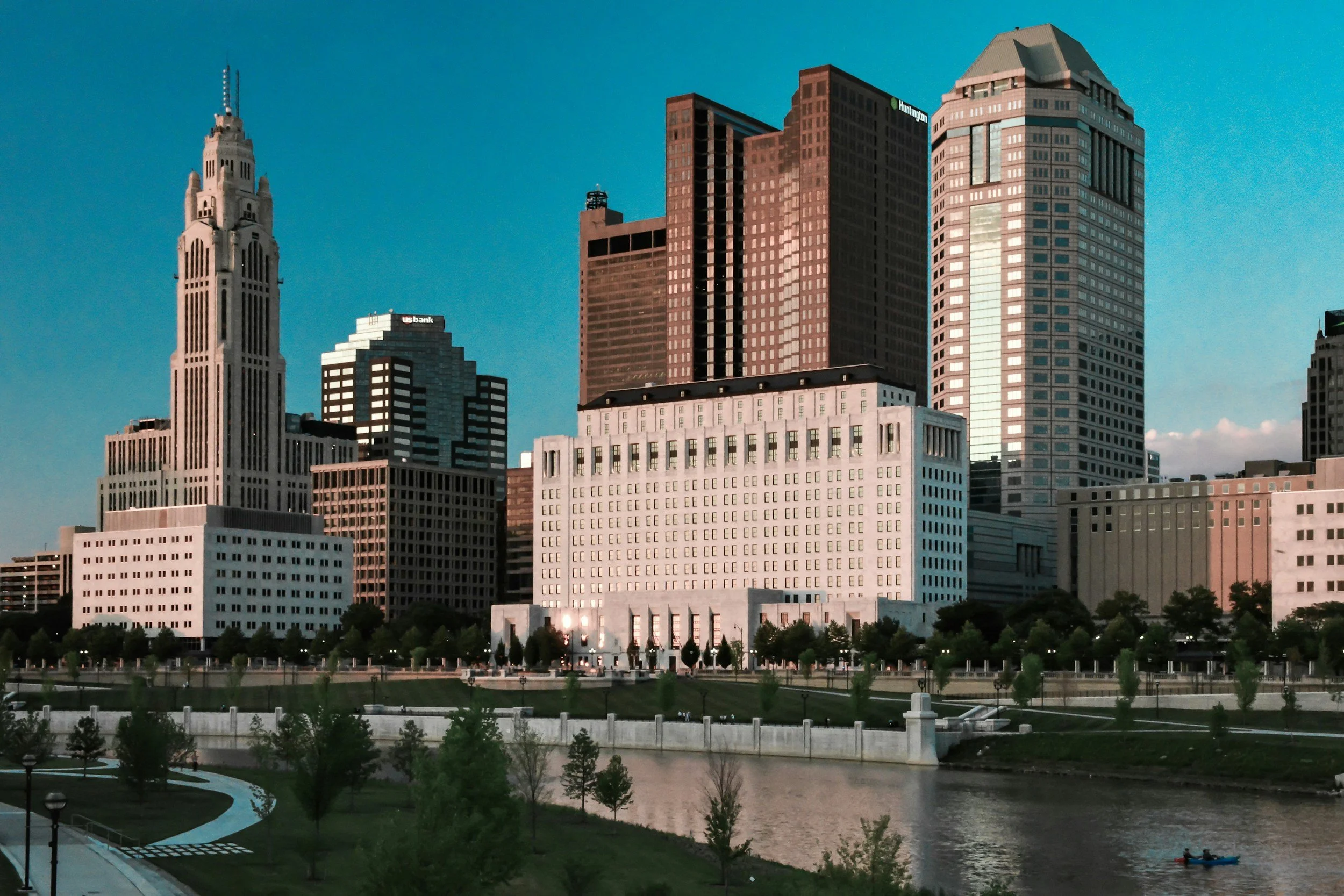
View of Chicago Skyline from Millenium Park. Photo by John Gardocki.


The keynote on the second day of the conference was developed to inspire the next generation of planners to be creative in the design of the American city form. Xavier De Souza Briggs, an associate professor at MIT; gave the keynote, “Inventing the Next American Economy: Why Planning Matters and Where the Pitfalls Lie.” He stressed that all cities are looking to retain and gain jobs; however, the current economics of tax incentives will not entice the technology jobs that sustain the 21st century graduate.

Earl Blumenauer, a U.S. Congressman representing Portland, Oregon, spoke as well about what Congress must do to enhance the planner’s job of sustaining America for generations to come.  He is an advocate for the Partnership for Sustainable Communities initiative created by President Obama to unify projects in the Environmental Protection Agency, Housing and Urban Development Department, and the Department of Transportation.

My experience at the conference has inspired me to think creatively about planning since a one-size-fits-all approach does not work in every city that needs revitalization. Chicago is investing in an elevated train railway to become a hotspot of activity, while Cincinnati is investing in its riverfront.  Both ideas are specific to the needs of each city.

APA Ohio 2013 Conference: Planning the New Normal

March 15th, 2013

Greater Ohio’s many partners from across the state and nation host innovative and thought-provoking events throughout the year to discuss issues concerning the prosperity and future of Ohio. The American Planning Association of Ohio is pleased to announce their 2013 Conference: Planning the New Normal, to be held in Cleveland September 25-27.


2013 APA Ohio Planning Conference 

Cleveland Convention Center * September 25-27, 2013

Save the date for the 2013 APA Ohio Planning Conference!  The statewide conference returns to Cleveland for the first time since 2005.  Take the opportunity to be one of the first to visit downtown Cleveland’s brand new convention facility, the Cleveland Medical Mart & Convention Center.  This three-day event will include the 25th Annual Cleveland Planning & Zoning Workshop. 

Learn about the ways you can participate in the APA Ohio Planning Conference:

  • Become a Sponsor/Exhibitor!  To be recognized in our mailing brochure, register your sponsorship by June 7.  Learn more about sponsorship opportunities here.
  • Attend the Conference!  Conference registration opens on July 1.

Visit our conference webpage for additional information. We look forward to seeing you in September!


The Global Cities Initiative

May 2nd, 2012

Our long-time partner, the Brookings Institution’s Metropolitan Policy Program, in joint partnership with JP Morgan Chase, is sponsoring “Going Global: Boosting the Economic Future of Ohio”- a Global Cities Initiative Forum, to be held in Columbus on May 9th.  Hosted by The Ohio State University, this unparalleled event will feature former Chicago Mayor Richard Daley; the Honorable Peter Ammon, Ambassador of Germany to the United States; an interview of Jamie Dimon, Chairman and CEO of JP Morgan Chase by David Gregory, host of NBC’s Meet the Press; and representation by Ohio business leaders and policymakers.

Going Global: Boosting the Economic Future of Ohio

Bruce Katz: In the aftermath of the great recession we must pursue a different growth model; the next economy will be metropolitan in form and function; metros are driving innovation in practice, policy and global trade links.

Bruce Katz delivered the featured speech from Columbus, Ohio, at “Going Global: Boosting Ohio’s Economic Future,” the second in a series of domestic and international forums being convened this year by the Global Cities Initiative. The forum, hosted by the Metropolitan Policy program at Brookings and JPMorgan Chase on May 9, explored how metropolitan-led economic growth—including global trade and investment—are important for job creation, and how Ohio can leverage its position in the global market. For more about this event, click here.

Future Funding for the Clean Ohio Fund Confirmed

January 25th, 2012

Greater Ohio was heartened to learn on Tuesday, January 23, 2012, that the Clean Ohio Revitalization Fund will continue to be funded, even as the Department of Development is reorganized into JobsOhio and the Development Services Agency

The Clean Ohio Revitalization Fund is an extremely important state program that helps cities and neighborhoods reclaim properties that have become unusable due to heavy contaminants and other dangerous chemicals associated with old manufacturing plants, old gas stations, and other hazardous building materials like asbestos.  To date, the Clean Ohio Fund has leveraged $10.00 of investment per grant dollar and has helped remediate sites that have gone onto be new warehouses, apartment buildings, and light industrial sites.  Check out this interactive map to find projects near you and summary of successful projects.

The Clean Ohio Fund is among the first in the nation and has been held up as an ideal model for other states.

We applaud the continuation of this indispensable program which has helped Ohio safely build upon its past and prepare itself for a prosperous future.

Transit in Ohio: A look at ODOT

January 20th, 2012

By Gene Krebs

Greater Ohio Policy Center has been pointing out that Ohio Department of Transportation has a profound budget imbalance since October of 2005, with concern as to how it will impact the ability of Ohio to keep and attract jobs.  We commend Director Wray for his admission that ODOT has a profound funding problem.  Admitting you have a problem is the first step to solving the problem.  The current funding structure is simply not sustainable, and we need to have a discussion about how to move people and goods in the most cost effective and safe manner, and that might not always mean highways, sometimes it might mean transit, multimodal, rail, bike paths or even sidewalks.  Cars and trucks are not always the answer to every transportation question.  There could be lower cost answers in each unique situation.

Greater Ohio suggests that ODOT and the General Assembly form a task force, similar to the one we suggested in the 2011 ODOT budget, to examine the fiscal future of ODOT and all transportation in Ohio, and to make a recommendation by December 1, 2012.  This report, along with the pending performance audit report of ODOT that Greater Ohio proposed, could form the foundation of a new future for transportation in Ohio, and one that could form the basis of job creation and true GDP growth for decades.


On Our Radar

July 1st, 2011

We at Greater Ohio Policy Center monitor the news daily to learn more about the smart growth initiatives and news happening in our state and beyond that affect Ohio. Below are articles that caught our attention over the past two weeks, and we thought they might interest you as well.

Furthermore, we’re pleased to report that the 2012-13 budget included a $45 million allocation for a first-of-its-kind initiative called the Innovation Fund and Program, which Greater Ohio had a significant role in creating. The fund is an important initial step in promoting strategic and thoughtful government restructuring in Ohio. For more information, read Greater Ohio’s letter announcing this important project.


Governance Reform
Decades ago, they split apart. Now, Moreland Hills, Orange, Pepper Pike and Woodmere are considering merging in the most significant step toward regionalism Cuyahoga County has ever seen.
The Columbus  Dispatch – 6-24-11      By Mary Beth Lane

Governance Reform
Decades ago, they split apart. Now, Moreland Hills, Orange, Pepper Pike and Woodmere are considering merging in the most significant step toward regionalism Cuyahoga County has ever seen.
The Plain Dealer – 6-22-11      By Laura Johnston

Housing
When the housing bubble burst, homeowners on the financial margin couldn’t keep up with their mortgage payments. Both lenders and homeowners alike were shellacked by the double whammy of lower home prices and high unemployment. Foreclosures skyrocketed.
Governing – 6-11      By John O’Leary

Transportation
While American cities are synchronizing green lights to improve traffic flow and offering apps to help drivers find parking, many European cities are doing the opposite: creating environments openly hostile to cars. The methods vary, but the mission is clear — to make car use expensive and just plain miserable enough to tilt drivers toward more environmentally friendly modes of transportation.
The New York Times – 6-26-11      By Elisabeth Rosenthal

Transportation
Want to get the most job-creation bang for your infrastructure buck? Focus on meeting the needs of cyclists and pedestrians.
StreetsBlogNetwork – 6-21-11      By Angie Schmitt

Transportation
By most accounts, transportation infrastructure in the United States is in serious disrepair. As roads and bridges across the country continue to age and deteriorate, governments at all levels are struggling to pay for maintenance and upkeep — not to mention investments in much-needed upgrades and new projects.
Governing – 6-11      By Russell Nichols, Ryan Holeywell

Transportation
A poll released last week shatters the conventional wisdom that Americans are divided about climate change and its potential cures.
Transportation for America – 6-21-11      By Sean Barry

Land Bank
The attorney for Trumbull County’s new land bank, Assistant Prosecutor Jeff Adler, has filed foreclosures on 49 properties so far and expects them to be ready for purchase by September.
The Youngstown Vindicator – 6-22-11      By Ed Runyan

Sprawl
The near-term future of real estate development isn’t downtown or in the far-flung suburbs. It’s in between.
The Wall Street Journal – 6-16-11      By Kris Hudson

Shrinking Cities
In January of this year, Newsweek published its list of “America’s Dying Cities.” The story declared that these were cities “with bleak futures ahead.” Not surprisingly, the list contained many cities that have struggled in past decade, losing both population and industry.
The Infrastructurist –  6-13-11      By Peter Kageyama

Economy
Gov. Mitch Daniels sits in his grand cave of a Renaissance Revival office and reviews Indiana’s economic fortunes, his self-effacing manner not entirely disguising satisfaction. The state’s pension funds are relatively healthy, the unemployment rate is dropping slowly and per capita income is ticking up, slowly.
The New York Times – 6-23-11      By Michael Powell, Monica Davey

Thanksgiving Reflections

November 24th, 2010

By Gene Krebs.

At this time of Thanksgiving, many may not see what of immediate value these past several months of political frenzy have been.

Simple; we live in a self correcting system.

No one conquered us and told us to change our leaders.  We have problems, sure, like any country.  But our difference is that our system, like any good functioning democracy, has a method in place for the voice of the people to be heard.  Not heard evenly, or all with the same decibel level of voice, but a voice.

America has always struggled with the contradiction of being founded both as an economic construct, and a moral construct.  Jamestown was settled by people on the hustle, looking for gold, adventure and fortunes.  The Mayflower Colony was settled by people looking for religious freedom, and religious homogeneity.  Thanksgiving, although begun by the Puritans of Plymouth, now symbolizes to Americans both the moral (we are thankful and humble before God) and economic greed (the closest many will come to Roman standard of gluttony) on one groaning table, surrounded by friends and family.  After all, we never want anyone to eat alone on Thanksgiving, and there is a reason why.  It co-joins both halves of our American experience.