GOPC Undergraduate Writing Intern Reflects on Vacant Properties Policies

May 16th, 2013

Ryan Conlon recently graduated from the John Glenn School of Public Affairs at the Ohio State University.  Ryan spent his spring 2013 semester as an intern at GOPC to fulfill his “Writing for Nonprofits” course. 

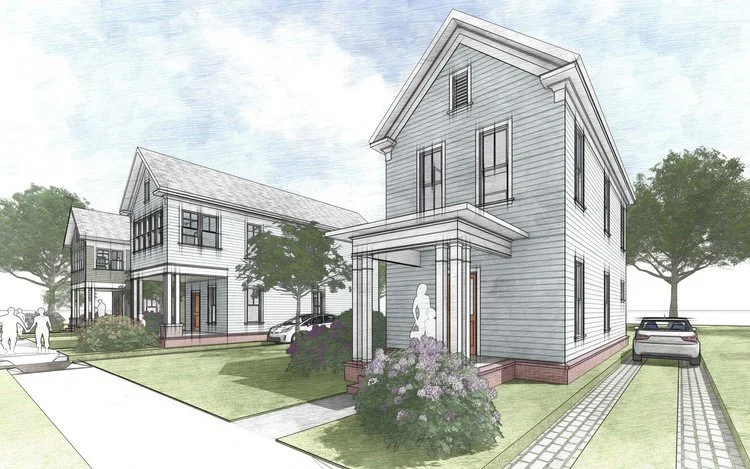
Possible Policies for Mitigating Vacant and Abandoned Properties in Ohio

By Ryan Conlon

As a part of my requirement to graduate from The John Glenn School of Public Affairs, I was assigned to write a policy recommendation on some sort of market failure.   During my time at Greater Ohio I have been learning about the vacant property issue in Ohio’s urban cores and became interested in understanding who should assume responsibility for a property when it becomes vacant.  Many homes that are going through the foreclosure process are neglected because neither the creditor nor the borrower have the necessary incentives to pay for maintenance.   My policy analysis proposes fixes for this market failure. 

I used three criteria to analyze three policy alternatives and make recommendations: effectiveness, efficiency, and political feasibility.

Creditor Responsibility Law.  Based on the New Jersey law, a similar law in Ohio would make the creditor initiating foreclosure responsible for maintenance during the foreclosure process.   In order for this policy to be successful, the cost of maintenance needs to be cheaper than the cost of paying for code violation fines.

  • As an example, in the Columbus neighborhood of North Linden it costs an average of $2,517 a year to maintain property up to Ohio housing code standards
  • Properties that have any code violations may be fined up to $3,000 and each day a code is violated, a separate penalty can be incurred, under Ohio Housing Code 4509.99 (A),

This policy would be effective because it will be cheaper for the financial institutions to pay $2,517 a year than to pay $3,000 or more for every code violation.  Despite these cost savings, crediting institutions would still incur high costs under this law, making it unlike that such a statute would be passed.  

Required Mediation.  The Franklin County Mediation Project (FCMP) is an optional program that gives creditor and borrower the opportunity to meet with an impartial mediator and try to renegotiate a deal to keep the owner from being foreclosed upon.  I investigated the potential costs of making mediation mandatory and found that

  • the cost per mediation for FCMP is $154
  • FCMP had a 50.5% “success” rate
  • If every foreclosure filing were mediated it would cost the state $19.5 million for 2013

21st Century Homesteader Program.  With this proposed program, a local government or land bank will acquire foreclosed property and allow a “homesteader” to live in the property for 18 months. During that 18-month period, the homesteader will only have to pay for maintenance and rehabbing projects.  After 18 months, the homesteader may choose to purchase the property from the government or land bank for two thirds the price of what the government purchased it for. 

  • Homeowner saves $7,624.84 by participating in Homesteader Program instead of buying home at sheriff’s sale
  • Net Present Value calculation shows government’s break-even point of buying a property and homesteading it comes at year 12.

 Recommendations

After analyzing all three alternatives and measuring their effectiveness, efficiency, and political feasibility; I recommend the state of Ohio begin a homesteading program.  The Cuyahoga Land Bank’s Owner Occupier Advantage Program is very similar to the homesteading program.  Governments and other land banks should strongly consider adopting a program similar to the homesteader program or Cuyahoga’s Owner Occupier Advantage Program.  These programs get responsible homeowners living in previously foreclosed or vacant property, which will reduce neighborhood blight in communities in need of revitalization.

Attending the American Planning Association National Conference

May 8th, 2013

By John Gardocki, GOPC Undergraduate Intern

The APA held its national conference in Chicago this year with the theme of “Planning Big.”  The conference was in April and I was fortunate to have the opportunity to attend the conference as a student member of the APA. The planners and speakers were willing to share their unique experiences in all the panels and to discuss the challenges the planning sector commonly faces.

View of Chicago Skyline from Millenium Park. Photo by John Gardocki.


The keynote on the second day of the conference was developed to inspire the next generation of planners to be creative in the design of the American city form. Xavier De Souza Briggs, an associate professor at MIT; gave the keynote, “Inventing the Next American Economy: Why Planning Matters and Where the Pitfalls Lie.” He stressed that all cities are looking to retain and gain jobs; however, the current economics of tax incentives will not entice the technology jobs that sustain the 21st century graduate.

Earl Blumenauer, a U.S. Congressman representing Portland, Oregon, spoke as well about what Congress must do to enhance the planner’s job of sustaining America for generations to come.  He is an advocate for the Partnership for Sustainable Communities initiative created by President Obama to unify projects in the Environmental Protection Agency, Housing and Urban Development Department, and the Department of Transportation.

My experience at the conference has inspired me to think creatively about planning since a one-size-fits-all approach does not work in every city that needs revitalization. Chicago is investing in an elevated train railway to become a hotspot of activity, while Cincinnati is investing in its riverfront.  Both ideas are specific to the needs of each city.

New Study on Clean Ohio Revitalization Fund

May 1st, 2013

A new study released by GOPC finds that public investments in brownfield sites through the state Clean Ohio Revitalization Fund (CORF) generate outsized economic benefits for Ohio’s taxpayers and communities.  Based on 21 CORF projects selected for diversity in their degree and type of end use, geographic location, and other characteristics, the GOPC study found the CORF generated substantial direct and indirect economic impacts.

  • The 21 projects resulted in a net positive value for the state’s investment, producing $1.16 billion in one-time contributions and contributing $1.4 billion annually to the state’s Gross Domestic Product.
  • Goods and services related to predevelopment alone produced a return on investment of $4.67 in new economic activity for every one dollar spent by the Program on the 21 projects.
  • For every direct job created or sustained through activities tied to a remediated brownfield, more than one additional job was indirectly created or sustained by the 21 projects.
  • Predevelopment and construction activities in the 21 projects created more than $360 million in household and business earnings, while ongoing project operations produce almost $500 million a year in household and business earnings annually.
  • The 21 projects annually generate $55 million in state and local taxes and were responsible for an additional $42 million in one-time state and local taxes.

Since 2002, CORF has made grants totaling over $315 million to support the clean-up of 160 brownfield sites in 71 communities.  Due to time and resource constraints, GOPC limited its analysis to a representative sample of 21 projects at various levels of development and success located across the state.

If all 160 CORF-funded sites experienced the same level of success and failure demonstrated in the 21 sites of the study, benefits to Ohioans would be projected at 7.6 times the above benefits, including: over $8 billion in one-time and over $10 billion in annual contributions to the state GDP; over $2.5 billion in one-time household and business earnings based on remediation and construction activities and over $3.5 billion in annual household and business earnings; and $418 million annually in state and local taxes.

“The Clean Ohio Revitalization Fund has been an incredible asset to Ohio,” said Lavea Brachman, GOPC Executive Director.  “This grant program has not only protected Ohio’s environment but has served as a critical catalyst for economic development in Ohio’s communities and generated state-level return on investment.  A nationally recognized program, we now have the facts to demonstrate that it reaps incredible dividends for Ohio’s taxpayers and communities.”

The study also identified a “ripple effect” throughout the state economy from the jobs created through the cleanup activities and reuse operations. Brownfield sites are scattered by the hundreds throughout the state in cities of all sizes as well as rural areas, a legacy of Ohio’s industrial past.

Revitalizing Ohio’s Vacant Properties: The 2013 Summit

May 1st, 2013

Revitalizing Ohio’s Vacant Properties:

Tools & Policies to Transform Communities

October 22-23, 2013
The Westin Columbus
310 S. High Street
Columbus, Ohio, 43215

The Greater Ohio Policy Center & The Thriving Communities Institute invite you to attend Revitalizing Ohio’s Vacant Properties, a two-day interactive training and policy solutions summit that will offer hands-on techniques and strategies to address vacant and abandoned property development challenges and generate redevelopment opportunities. It is intended for local and regional leaders, land bank practitioners, nonprofit community development organizations, as well as private sector representatives.

The summit will provide opportunities for input into policy reforms that arm local leaders with new tools and that align policies with local community development needs. Sessions will feature local practitioners, financial institutions, and state and national level redevelopment experts. The Institute’s goals—training and education, coalition-building and policy advancement—are vital to productively revitalize Ohio’s communities.

For questions or sponsorship opportunities, please contact Kate Hydock of Thriving Communities Institute (khydock@wrlandconservancy.org or 216-515-8300) or Christina Burke of Greater Ohio Policy Center (cburke@greaterohio.org or 614-224-0187).

Agenda and online registration information to come.

Greater Ohio Featured in Youngstown Workshop

March 29th, 2013

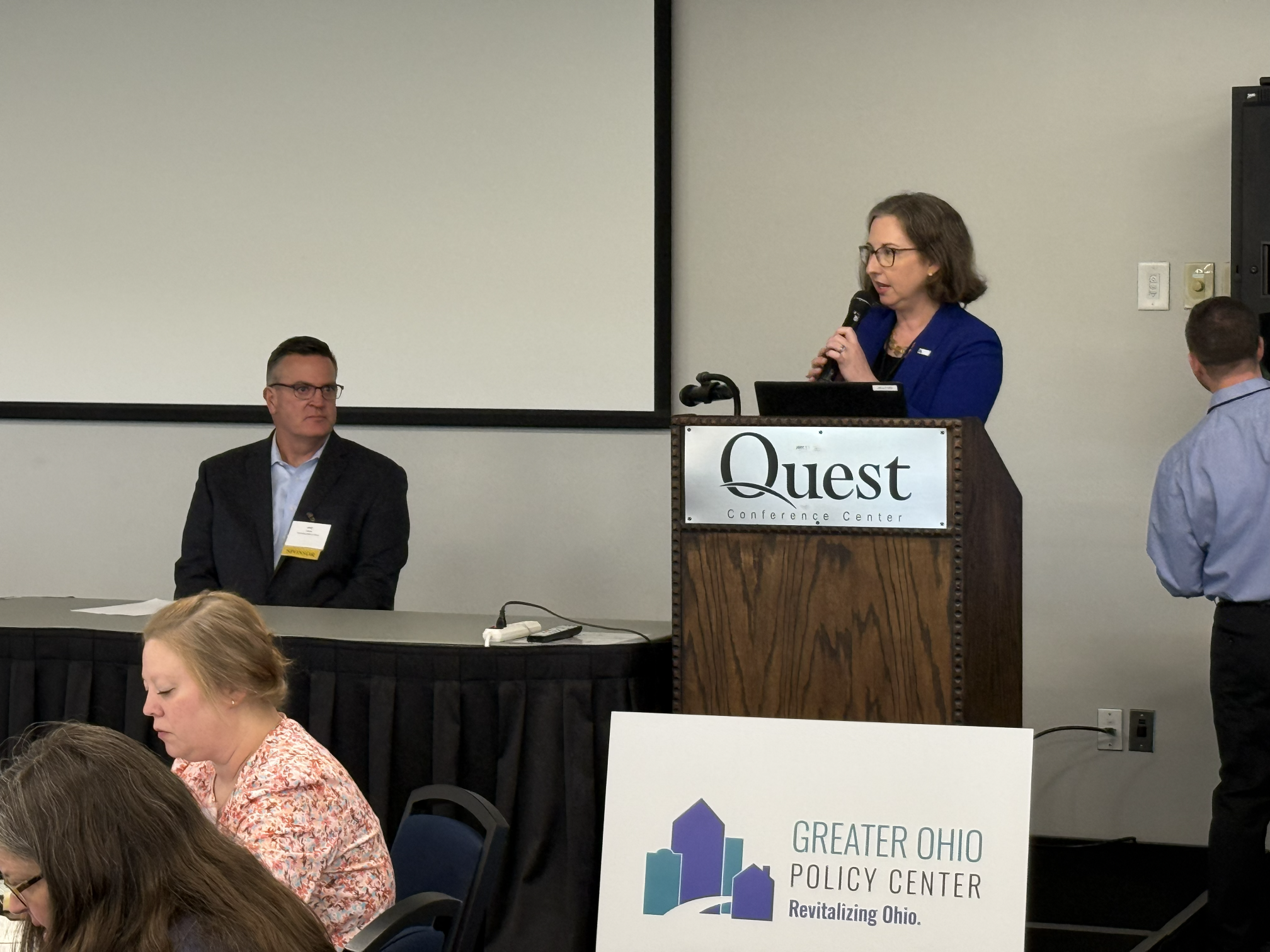
Expert panel (from left): Alan Mallach, Brookings Institution; Lavea Brachman, Greater Ohio Policy Center; Thorsten Wiechmann, TUD professor; and Ian Beniston, YNDC.

On March 28th, Greater Ohio Executive Director, Lavea Brachman, traveled to Youngstown, Ohio for the workshop “Policies and Strategies in Shrinking Cities: The Case of Youngstown, Ohio,” hosted by the Youngstown Neighborhood Development Corporation (YNDC) , German Marshall Fund (GMF) and Technical University of Dortmund, Germany (TUD). The workshop included site visits, an expert panel in which Brachman participated, and a presentation by the urban planning students of TUD on ideas for the regeneration of Youngstown’s riverfront and neighborhoods.

The Business Journal cited Lavea Brachman:

Lavea Brachman, executive director of the Greater Ohio Policy Center, said the city is pursuing the right course in its neighborhoods through organizations such as the Youngstown Neighborhood Development Corp., targeting those areas that stand the best chance of turning around in the near-term.

“It’s important to look at our redevelopment strategy,” Brachman said. “One of the things we’re talking about is a master plan for certain key neighborhoods, such as Wick Park, that provides a plan for the future and some comfort for investors.”

Much of the redevelopment in the Ruhr Valley, Brachman noted, emphasizes the region’s industrial heritage while at the same time brings to life new cultural amenities. “They used these old coal and mining facilities and they’re now beautiful cultural designations.”

It’s an example from which cities such as Youngstown can benefit.

“That goes back to building on our assets,” Brachman said, citing a tour of industrial sites she took just that morning. “They have fantastic beauty, and Youngstown should be capitalizing on that.”


The following articles cover the workshop:

Vindy: German Students Propose Improvements for Youngstown

WKBN: German Students Offer Revitalization Ideas for Youngstown

Business Journal: German Students Offer Fresh Perspectives on Redevelopment

APA Ohio 2013 Conference: Planning the New Normal

March 15th, 2013

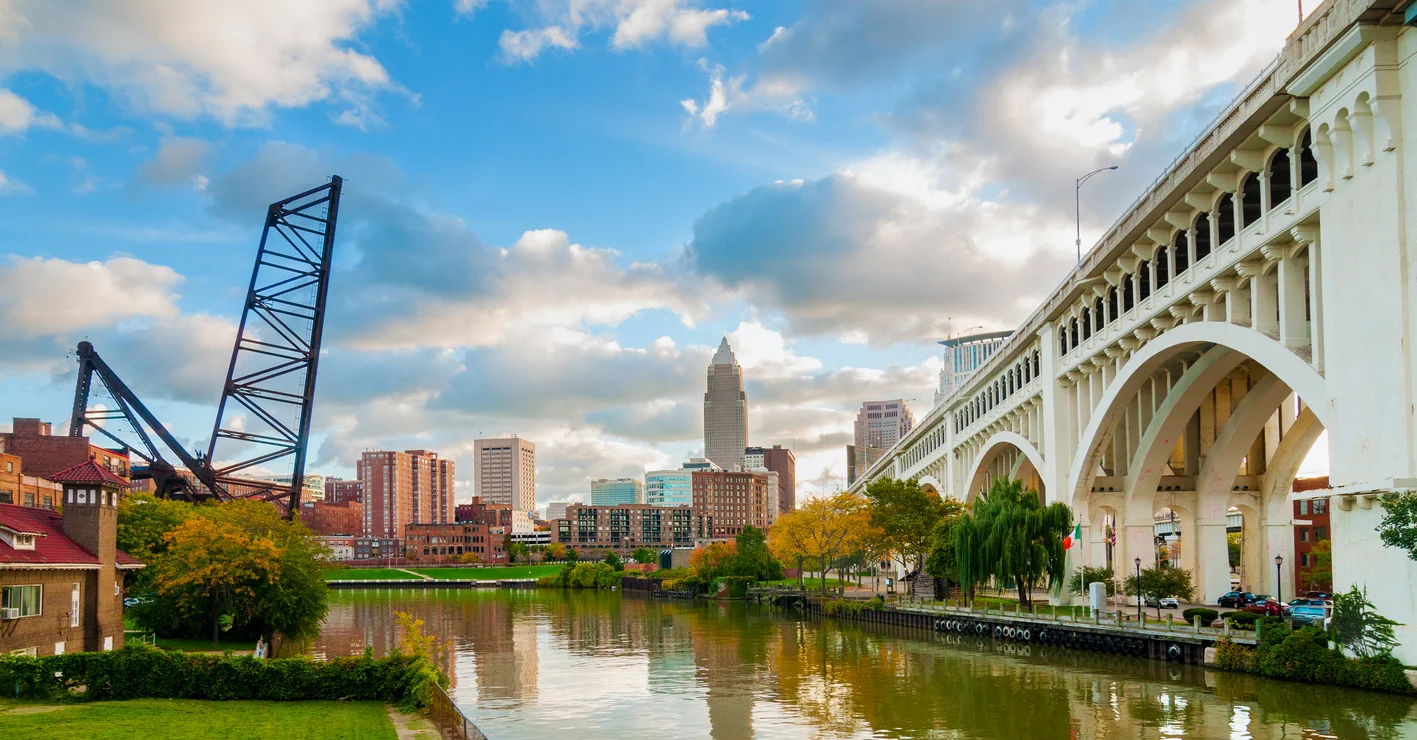
Greater Ohio’s many partners from across the state and nation host innovative and thought-provoking events throughout the year to discuss issues concerning the prosperity and future of Ohio. The American Planning Association of Ohio is pleased to announce their 2013 Conference: Planning the New Normal, to be held in Cleveland September 25-27.


2013 APA Ohio Planning Conference 

Cleveland Convention Center * September 25-27, 2013

Save the date for the 2013 APA Ohio Planning Conference!  The statewide conference returns to Cleveland for the first time since 2005.  Take the opportunity to be one of the first to visit downtown Cleveland’s brand new convention facility, the Cleveland Medical Mart & Convention Center.  This three-day event will include the 25th Annual Cleveland Planning & Zoning Workshop. 

Learn about the ways you can participate in the APA Ohio Planning Conference:

  • Become a Sponsor/Exhibitor!  To be recognized in our mailing brochure, register your sponsorship by June 7.  Learn more about sponsorship opportunities here.
  • Attend the Conference!  Conference registration opens on July 1.

Visit our conference webpage for additional information. We look forward to seeing you in September!


Detroit’s Rebirth: “Future City” Report offers new ideas and solutions

February 13th, 2013

By John Gardocki, Greater Ohio Policy Center Intern

“Cities are living places that require ongoing awareness and firm yet flexible approaches to decision making which acknowledge changing realities and multiple voices, leading to pragmatic and agreed-on solutions” (Detroit Future City Framework, 12).

Future City, a two year report offering short and long term solutions to restore Detroit was recently released by Detroit Works. It is the culmination of an in-depth 24 month process involving 30,000 interviews, 70,000 surveys, and hundreds of public meetings.

Below are some key statistics that demonstrate the challenges Detroit is facing and the need to come together to solve these problems.

  • 79,725 out of 350,000 units are vacant in the city of Detroit-meaning the city has an astounding vacancy rate of 22.7%
  • 700,000 people live in a city originally designed for 2 million people.
  • There is only one job for every four Detroit residents
  • A recent survey of Detroit residents revealed that nearly one-third of the respondents would leave the city within five years, citing safety as the top reason.

Four major targets are to be evaluated in 2030 that stakeholders see in their vision that will be accomplished from the framework.

By 2030, Detroit will have a stabilized population
By 2030 the city will have two or three jobs for each person living in the city
By 2030, the Detroit Metropolitan region has an integrated regional public transportation system
By 2030, Detroit will become a city for all
 

The plan outlines several strategies that should be put into place to make a permanent transformation in Detroit over the next 20 years or more. There are five major planning elements: Economic Growth, Land Use, City Systems, Neighborhoods, and Land and Building Assets built within the framework to enforce the strategies:

  • Economic Growth is intended to make Detroit’s economy more knowledge based by utilizing four economic pillars: Global Trade/Industrial, Digital/Creative, Local Entrepreneurship, and Education & Medical. The four knowledge based sectors are meant to diversify the workforce.
  • Land Use is integral to transforming Detroit by addressing four key ideas: A City of Multiple Employment Districts, A City of Connecting People to Opportunity, A Green City Where Landscapes Contribute to Health, and A City of Distinct, Attractive Neighborhoods. The city’s current footprint is too expansive to meet the current population and fiscal capacity and so it needs to be refocused to be more sustainable.
  • City Systems revises the path to sustainable systems by using three transformative ideas: Strategic Infrastructure Renewal, Landscape As 21st Century Infrastructure, and Diversified Transportation for Detroit and The Region. This element is important to the city to determine which systems are critical to remain online, discontinued, or upgraded. Financially the city cannot afford to give out these resources to areas that are not populated.
  • Neighborhood utilizes five ideas to create more choices for residents: A City of Many Assets, A City of Neighborhood Choices, A City of Different Strategies for Different Neighborhoods, A City of Diverse Housing Types for Diverse Populations, and A City of Residents Who Engage In Their Own Futures. To remain competitive and meet the demands of a 21st century city, Detroit needs to understand the needs of their many neighborhoods and the unique challenges each neighborhood may face.
  • Land and Building Assets is critical to solving Detroit’s vacancy problems which will be initiated by: A City That Shares A Vision: Coordinating the Management of Vacant Land, A City Where Everything Is Connected: Viewing Vacant and Problem Properties Within One Interrelated System, A City of Strategic Approaches: Recognizing The Uniqueness of Each Property’s Value and Challenges, A New Urban Landscape: Using Land for Infrastructure And Innovation, and a City Where Public Facility Investments Count: Aligning Public Facilities With Land Use Transportation. Detroit has numerous neighborhoods that are beset by blight and have vacant land that needs to be utilized for new uses like parks, urban farming, and commercialization. To get a handle on the declining population will mean a critical movement to alter the vacancy problem in Detroit.

The use of info-graphics and GIS data helps to showcase Detroit’s urban crises and how they are interconnected. Figuring out exactly where the problems are heavily weighted will help impact the city’s strategy.

Detroit has a wide range of economic assets that should be capitalized on to fuel economic growth. Assets include existing businesses, institutions and transportation infrastructure. (Detroit Future City Framework, 38).

This first of its kind report can be a great tool for other cities across America facing similar problems to better assess and find new and innovative solutions.

Highlights from “Advancing Ohio’s Urban Agenda”

January 25th, 2013

On our journey from Cincinnati to Columbus to Cleveland for the joint ULI/GOPC/LOCUS event series, “Advancing Ohio’s Urban Agenda: Walkable Communities for Globally Competitive Cities,” trends amongst the three cities became apparent as participants engaged in the dialogue about addressing the market demand for walkable development in Ohio. We were able to capture some of these trends in both text and film (yes, videos are coming!) form and would like to share some of the key highlights with you.

Highlights from the Events:

  • Millennials (aka Generation Y) are shifting market demand and cities in Ohio must meet that demand for walkable, urban development in order to remain globally competitive.
  • As more walkable development (approximately 100-500 meters in diameter of mixed-use, pedestrian-friendly development) is added to areas, their property values increase and the local market improves.
  • Transportation drives development. If developers build quality products in the right locations with access to urban-friendly transportation systems, they will get a price premium. Seventy percent of ballots across the nation to increase sales tax to fund public transportation have passed.
  • Read the rest of this entry »

Advancing Ohio’s Urban Agenda

January 18th, 2013

In Ohio and around the country, real estate developers and investors are recognizing pent-up demand for and a market shift toward sustainable, walkable urban places. Despite this paradigm shift and change in market momentum, many local, state and federal policies currently in place distort development incentives and hamper efforts to create the development consumers want and that support strong local economies. Urban developers and real estate and land use experts can align to provide state and national policy makers with expert advice on current consumer demand and the many benefits of urban and metropolitan growth strategies.

Over the past few days—January 16th and 17th—Greater Ohio traveled to Cincinnati, Columbus and Cleveland to co-host events with the Urban Land Institute (ULI) district councils of Cincinnati, Cleveland and Columbus, as well as LOCUS to host “Advancing Ohio’s Urban Agenda: Walkable Communities for Globally Competitive Cities,” an exclusive series featuring Christopher Leinberger, President of LOCUS—a national network of real estate developers and investors that advocates for sustainable, walkable urban development in America’s metropolitan areas.

These first-of-their-kind events in Ohio provided a forum to connect developers from urban centers across the state to discuss the demand for sustainable communities. The gatherings were a critical first step toward identifying ways to inform policymakers and ultimately help more communities across Ohio develop in ways that are sustainable for the environment, the people living in them, and their bottom lines.

Click here to read Mark Ferenchick’s Columbus Dispatch article on the Columbus event: “Walkable urban development will keep younger professionals in Columbus, expert says”.

Greater Ohio 2012 Accomplishments

January 18th, 2013

We are proud of the accomplishments we have made in 2012. To fill you in on what’s been going on at GOPC’s office and throughout the state in the past year, below is a list of our accomplishments within our three priority policy areas: Urban Core and Neighborhood Redevelopment, Transportation and Sustainable Growth, and Regional Governance Reform. Together, redeveloping our urban centers, expanding our transportation options, and fostering regional cooperation will contribute to smarter, more sustainable growth, improving our quality of life and economic competitiveness in Ohio.

URBAN CORE & NEIGHBORHOOD REDEVELOPMENT

Raising Our Statewide Profile:

  • Ohio Properties Redevelopment Institute. GOPC hosted this innovative two-day forum that promoted solutions to vacant and abandoned properties. Nearly 200 local leaders from municipalities and non-profit community development organizations across the state attended.
  • Moving Ohio Forward Grant Program. The Ohio Attorney General’s office contracted with the GOPC to provide technical assistance to communities for the Moving Ohio Forward Grant Program, which supports Ohio’s communities undertaking activities to demolish abandoned and vacant residential properties.
  • Panels and Keynotes. GOPC presented on urban revitalization issues over 20 times to a variety of audiences including Ohio code enforcement officers, Cincinnati’s Foreclosure Group, Cleveland’s Vacant and Abandoned Property Action Council (VAPAC), and Heritage Ohio workshop attendees.
  • In the Media. In 2012, GOPC was quoted or cited over 50 times in Ohio’s major newspapers and other publications around the country. In one article about vacant properties, The Columbus Dispatch relied heavily on data and graphs produced by GOPC.

Read the rest of this entry »